Solar power surplus: how to get more value from your renewable assets
Solar panels produce the most when demand is at its lowest, making negative prices increasingly common. Discover why flexibility is becoming crucial and how a smart control signal lets your battery and solar panels act at the moment energy is worth the most.

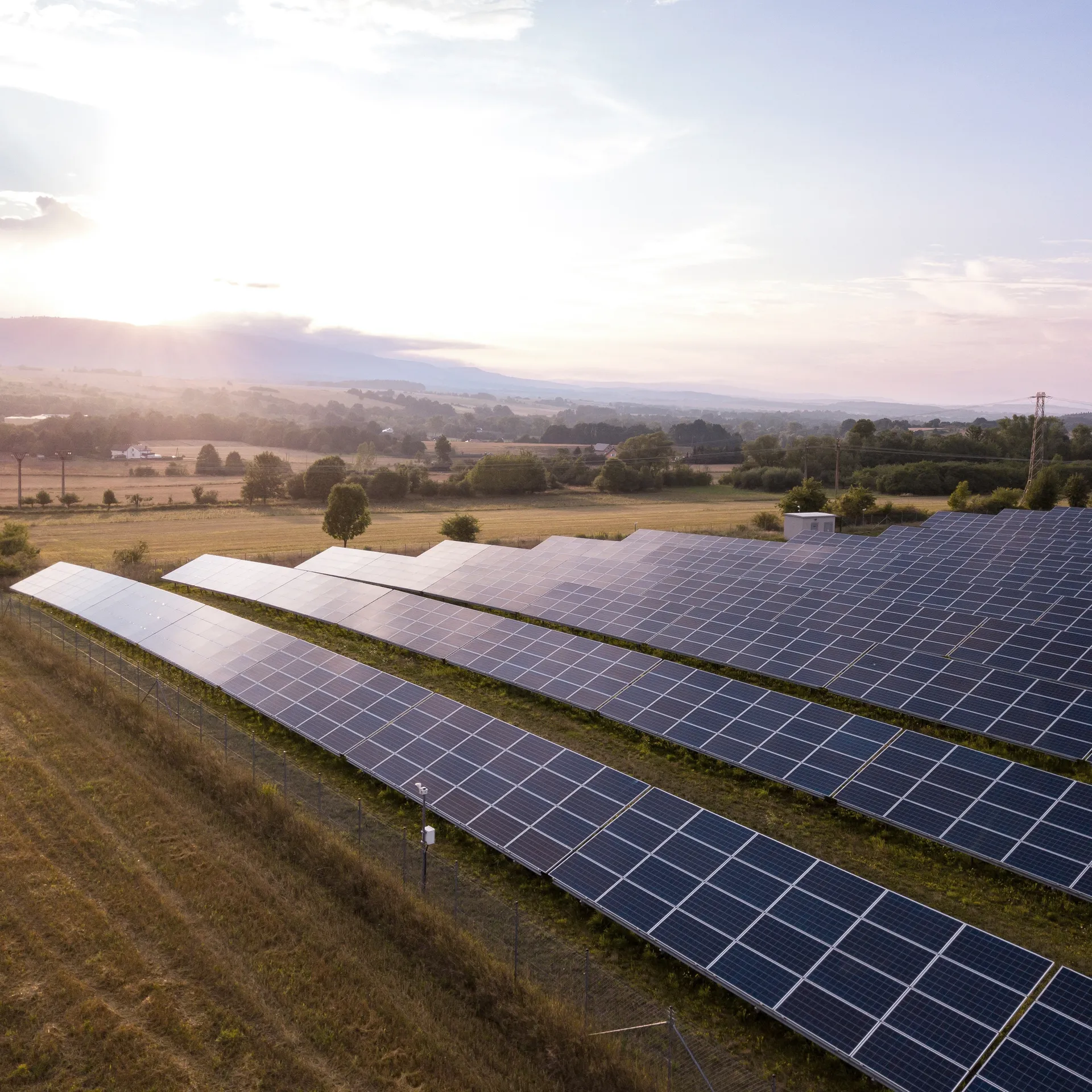
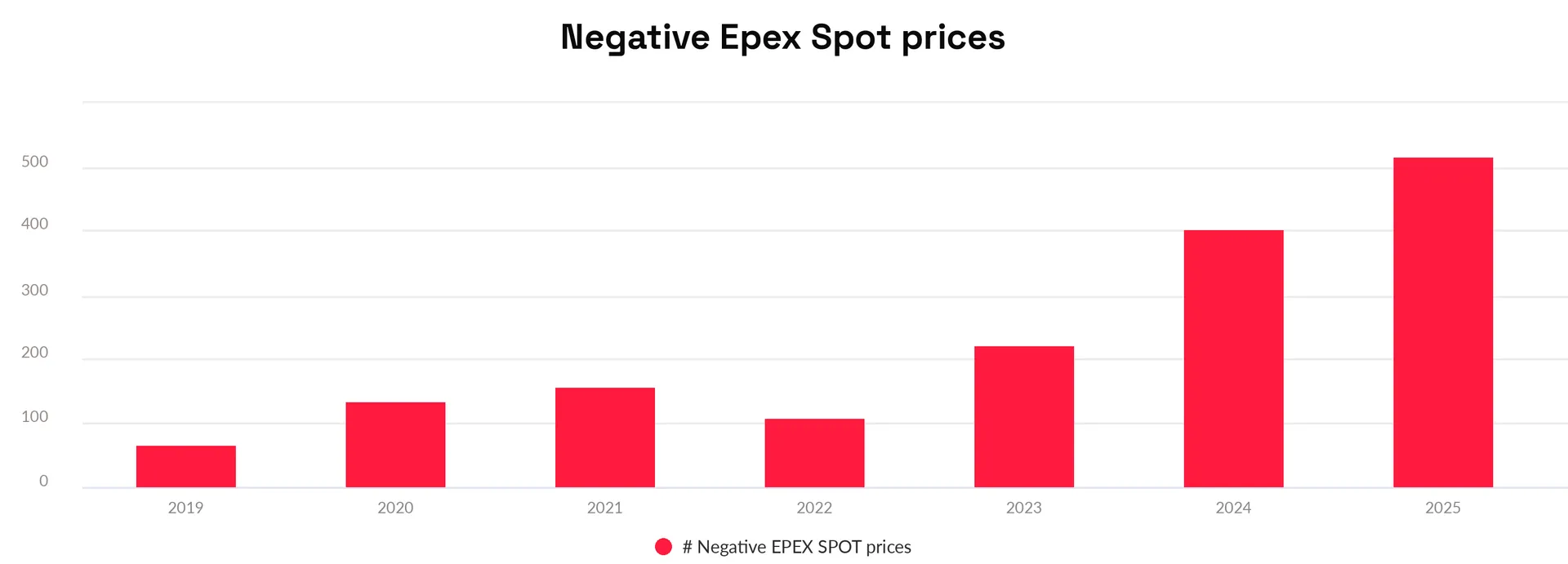
In 2025, electricity prices in Belgium fell below zero for 519 hours, a new record. According to a report by CREG, the federal energy regulator, this is mainly due to the growing popularity of solar panels. As the solar capacity installed rises, so does the number of hours with negative prices. When the price drops below zero, you pay to put the power you generate back onto the grid.
Peak production, low demand: how does that happen?
Electricity has to be consumed at the very moment it is produced. That balance keeps the grid stable and prevents outages. In theory, matching supply and demand sounds straightforward. In practice, the rise of renewable energy is increasingly creating a mismatch. Solar panels produce the most during the day, precisely when demand tends to be low.
When supply exceeds demand, a surplus builds up and the price plunges below zero. Take a concrete example: on a sunny spring day, a company with a solar installation of a few hundred kW produces well above its own consumption. Without intelligent steering or storage, that surplus is pushed onto the grid at exactly the moment the price is low, or even negative. Every kWh fed back at that point costs money instead of generating revenue.
Flexibility becomes crucial
The electricity market is evolving toward a system where the volume of renewable energy is not the only thing that counts. What matters most is how well supply and demand are aligned. In the past, nuclear power plants ran at full capacity day and night, and the night tariff drew consumption to the nighttime hours. Today, the surplus sits in the middle of the day, and consumption increasingly has to adapt to the moment energy is available. To manage this, flexibility becomes crucial.
Surpluses need to be stored, and consumption needs to be shifted to times when prices are low. Without that adjustment, the gap between negative prices and peak prices will only widen.
The energy transition isn’t about more renewable production, but about how we determine when and how that energy is used. An asset that only runs on a fixed schedule has less value today, because that asset doesn’t move with what the market is worth at that moment.

Assets that move with market value
Traditional steering usually starts from a fixed schedule or static rules. That makes an installation’s behavior predictable, but not very agile in a market that is constantly moving. A battery that charges and discharges on a fixed clock does little more than the bare minimum. Connected to the Stelmo control signal, that same battery responds to what is happening in the market and can capitalize on price opportunities or price peaks as soon as they arise.
For the company in our example, this means the battery doesn’t just react, it plans ahead. As soon as the EPEX Spot day-ahead prices are known, a charging and discharging plan for the next day is already in place, aligned with expected solar production, on-site consumption, the battery’s state of charge, and local grid tariffs. That plan is continuously adjusted based on price signals from EPEX Spot and the imbalance market. As a result, the battery charges during the cheapest quarter-hours and holds capacity in reserve for the most expensive moments, either for self-consumption or for sale to the grid.
The value of an energy asset lies not only in what it does, but above all in when it does it. Stelmo’s control signal determines that moment, taking into account market prices, local grid tariffs, and site constraints. When a site has multiple assets, such as solar panels, a battery, and a production installation, they no longer make separate decisions but respond as a single system. The signal connects to what is already in place, through an existing EMS or an open API. It works just as well for a small installation at a single company as it does for large, standalone battery parks.
Related insights
How does peak shaving reduce your customers’ peak consumption?
A single quarter-hour of peak consumption can raise your customers’ grid costs for months. Discover how peak shaving flattens those peaks and how smart control puts the remaining battery capacity to work.

Energy flexibility, the backbone of sustainable energy
Sustainable energy only works when production, consumption and prices are aligned.

Video: What is a control signal and what does it do?
What happens between the energy market and your battery or charging point? This video explains how a control signal combines local data, forecasting, and market information into the right action at the right moment.